Why Your Business Needs Marketing and a Funnel - Even If Old Funnels Feel Like Internet Archaeology

Introduction: A Great Offer Is Not Enough
A great product does not automatically sell itself.
Annoying, but true.
You can have the best service, the most beautiful retreat, the smartest biotech solution, the most useful consulting offer, the most thoughtful wellness program, or the most life-changing course - and still hear digital crickets.
Because people do not buy what they do not understand.
They also do not buy what they cannot find, cannot trust, or cannot explain to themselves in one sentence.
That is where marketing comes in.
And no, marketing is not just “posting something on Instagram because everyone says you should.” It is not throwing random ads into the void and hoping the algorithm wakes up in a generous mood. It is not making a pretty website and then wondering why nobody books a call.
Marketing is how people discover you, understand you, trust you, and eventually decide:
“Okay. This is for me.”
And a funnel?
A funnel is just the path that helps them get there without needing a treasure map, three webinars, five automated emails, and a PDF called “10 Secrets to Unlocking Your Highest Potential.”
We have suffered enough.
What Is a Marketing Funnel, Really?
A marketing funnel is the journey someone takes from first hearing about your business to becoming a customer or client.
That is it.
It does not need to sound mysterious. It does not need to involve 47 automations and a whiteboard full of arrows that looks like a crime investigation.
A good funnel answers three simple questions:
How do people find you?
Why should they trust you?
What should they do next?
Without a funnel, your marketing becomes scattered.
You post on social media.
You update your website.
You send a newsletter once every lunar eclipse.
You run ads.
You create an offer.
But nothing connects.
So people see you, maybe even like you, and then disappear.
Not because your offer is bad.
Because the path is unclear.
A funnel creates structure. It connects your content, website, emails, ads, offers, lead magnets, retargeting, and calls to action into one customer journey that actually makes sense.
The goal is not to manipulate people.
The goal is to stop making them work so hard to understand why they should choose you.
Why Your Business Needs Marketing
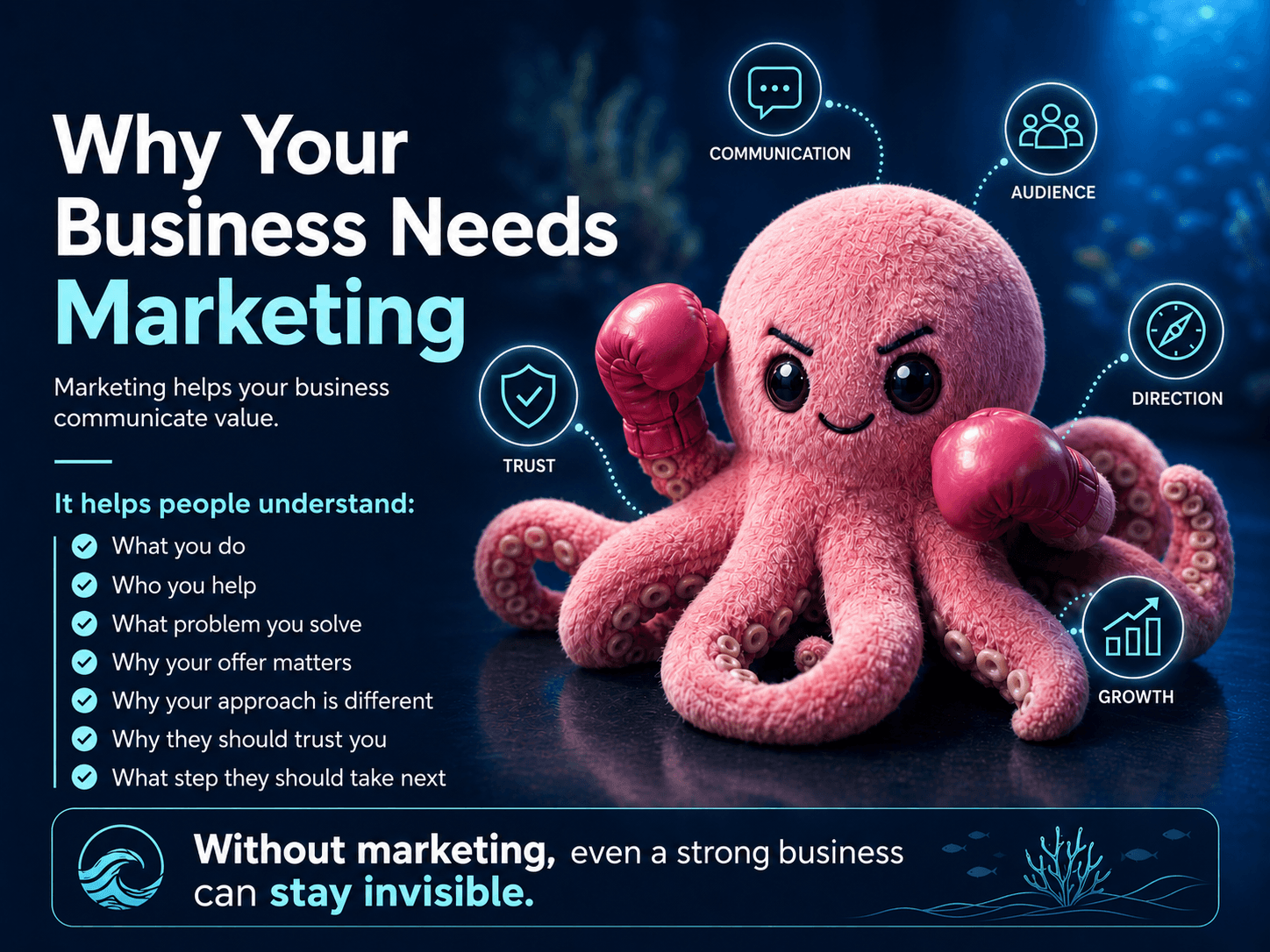
Marketing helps your business communicate value.
It helps people understand:
What you do
Who you help
What problem you solve
Why your offer matters
Why your approach is different
Why they should trust you
What step they should take next
Without marketing, even a strong business can stay invisible.
And visibility matters.
But visibility alone is not enough.
You can get traffic, views, likes, clicks, and followers - and still not get customers.
That is where the funnel matters.
Marketing creates attention.
A funnel gives that attention somewhere to go.
Why Scattered Marketing Does Not Convert
A lot of businesses are doing marketing, but not necessarily building a system.
They post when they remember.
They run ads without a clear landing page.
They create content without a clear message.
They send emails only when they need to sell something.
They have a website, but the offer is hiding somewhere between a vague headline and a “contact us” button that feels like a threat.
This is not a strategy.
This is digital confetti.
It may look active, but it does not create a clear path for the customer.
A potential customer should not have to investigate your business like they are solving a cold case.
They should quickly understand:
What you offer
Who it is for
What problem it solves
What makes it credible
What they should do next
If these answers are not obvious, people hesitate.
And hesitation is where conversions go to die.
The Modern Customer Journey Is Not Linear
People do not always move through your marketing in a neat little line.
They may discover your business through a LinkedIn post.
Then check your website.
Then look at your Instagram.
Then disappear.
Then come back two weeks later through a blog article.
Then see a retargeting ad.
Then ask someone for an opinion.
Then finally book a call.
From the business side, this can look chaotic.
From the customer side, it is just research.
People want to feel confident before they act, especially in the New York or California market where they are constantly comparing options, reading reviews, and being sold to from every direction.
That means your marketing needs to create trust across multiple touchpoints.
Your website, content, emails, ads, social media, and sales process should all work together.
They should all say the same thing:
“We understand your problem. We know how to help. Here is the next step.”
What a Simple Funnel Can Look Like
A simple modern funnel might look like this:
A potential customer sees your educational post.
They visit your website.
They read a blog article.
They download a useful resource.
They receive a few helpful emails.
They see a case study.
They book a consultation.
Nothing about that has to feel aggressive.
The funnel simply connects the dots.
Without it, people may like your content but never act. They may visit your website but feel confused. They may be interested but forget about you. They may trust your expertise but not know how to work with you.
A funnel turns scattered attention into movement.
That is the job.
Not pressure.
Direction.
Marketing Is Not Pressure. It Is Clarity.
A good funnel should not feel like emotional hostage negotiation.
It should not make people feel trapped, tricked, or dragged through some weird internet ritual before they can understand the offer.
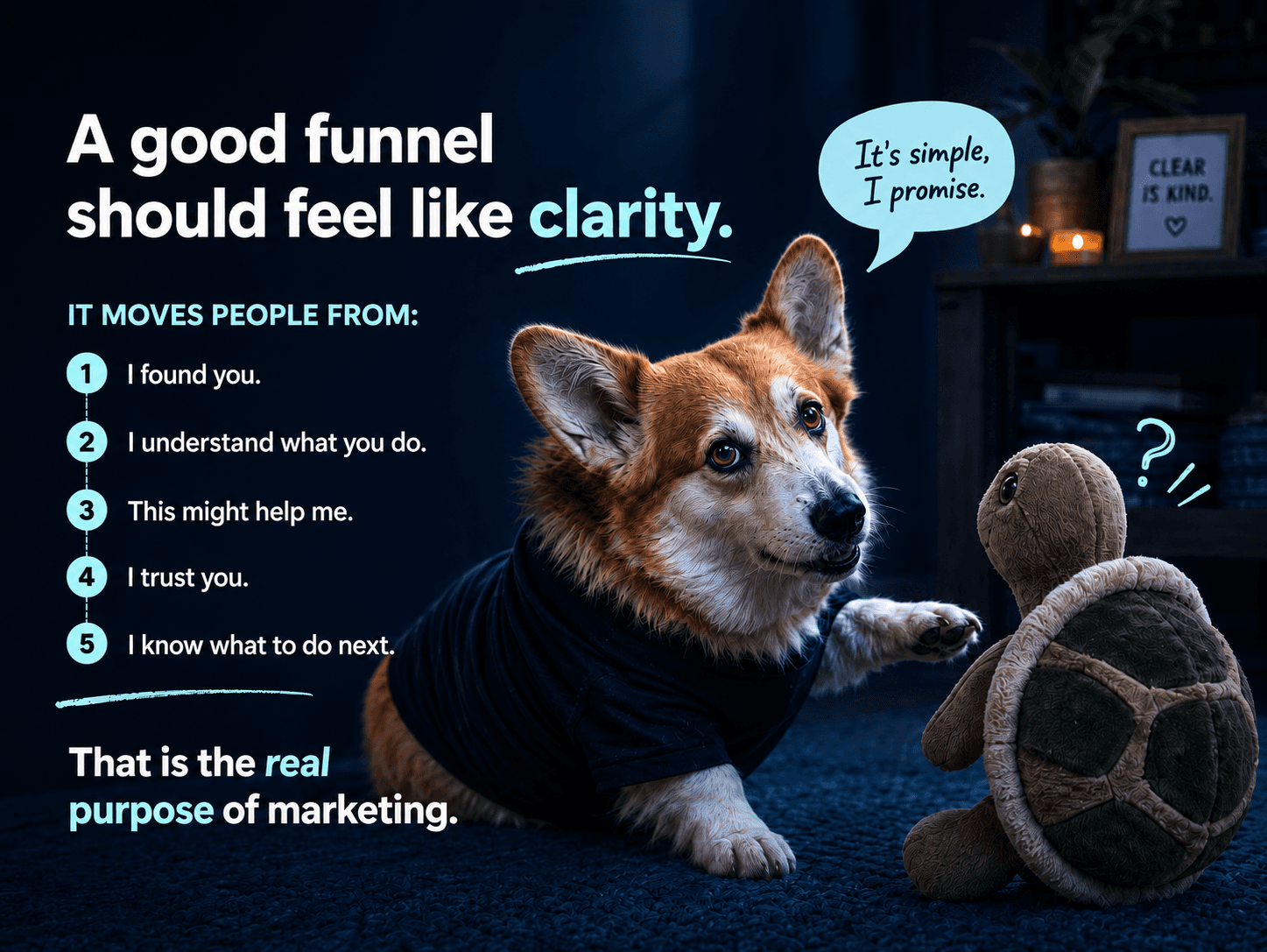
A good funnel should feel like clarity.
It moves people from:
“I found you.”
To:
“I understand what you do.”
To:
“This might help me.”
To:
“I trust you.”
To:
“I know what to do next.”
That is the real purpose of marketing.
Not to shout louder.
Not to chase every trend.
Not to build complexity because someone on the internet said you need a 19-step funnel.
But to create a clear path between your business and the people who need what you offer.
Why Your Business Needs Both Marketing and a Funnel
Marketing helps people discover you.
A funnel helps them move forward.
You need both because visibility without direction does not create consistent growth.
If people see your content but do not understand your offer, you lose them.
If people visit your website but cannot figure out what to do next, you lose them.
If people are interested but never hear from you again, you lose them.
If people trust your expertise but do not see a clear path to work with you, you lose them.
A good marketing system prevents those gaps.
It creates a connected journey from awareness to trust to action.
That is where growth becomes more predictable.
Not magical.
Not effortless.
Not “post three times and become a millionaire by Thursday.”
Predictable.
Strategic.
Built on actual customer behavior.
Much less glamorous. Much more useful.
Final Thoughts: Make It Easier for People to Choose You

Your potential customers are not lazy.
They are overwhelmed.
They do not want to decode confusing service pages, sit through empty webinars, download generic PDFs, or move through unnecessary steps before they understand how you can help them.
They want clarity.
They want value.
They want trust.
They want a simple next step.
A strong marketing funnel does not pressure people into buying.
It guides them.
It helps the right people find you, understand you, trust you, and choose you.
At Reefline Marketing, we help businesses build marketing systems that are clear, strategic, and connected - from brand messaging and content to websites, campaigns, funnels, SEO, paid ads, email marketing, and digital growth strategy.
Because good marketing should not make the customer journey harder.
It should make the decision easier.
Key Takeaways
A great product or service is not enough if people do not understand it.
Marketing helps customers discover your brand and understand your value.
A funnel creates a clear path from awareness to trust to action.
Scattered marketing creates noise, not predictable growth.
A good funnel connects your content, website, ads, emails, offers, and calls to action.
Customers do not need more pressure. They need a clearer reason to choose you.
The best funnels are simple, useful, and built around real customer behavior.
Marketing creates attention. A funnel turns that attention into movement.
That’s it. Make the path clear, and people will have a much easier time choosing you.🐾


