What Works in Modern Marketing Now: Clear Content, Trust, and Simpler Funnels

What Works in Modern Marketing Now: Clear Content, Trust, and Simpler Funnels
Introduction: Stop Making Marketing More Complicated Than It Needs to Be
Modern marketing is not about building the longest funnel.
It is about building the clearest one.
Somewhere along the way, businesses were told they needed more of everything.
More platforms.
More emails.
More ads.
More lead magnets.
More reels.
More funnels.
More urgency.
More chaos, but make it branded.
And now everyone is exhausted.
Business owners are overwhelmed. Customers are overwhelmed. Even the algorithm looks emotionally unavailable.
So let’s simplify.
Marketing still works.
Funnels still work.
Content still works.
Email still works.
Paid ads still work.
SEO still works.
But they work best when they are connected to a clear strategy and an actual customer journey.
Not when they are thrown into the internet like confetti and called “brand visibility.”
What Works Now: Fewer Steps
People do not want to decode your business.
They do not want to click through ten pages to understand your offer. They do not want to sit through an hour-long webinar just to find out whether your service is relevant. They do not want to download a generic PDF before they can understand what you actually do.
The modern customer journey needs fewer unnecessary steps.
That does not mean the strategy is lazy.
It means the strategy is clear.
Your audience should quickly understand:
What you do
Who you help
What problem you solve
What makes you different
Why they should trust you
What they should do next
If your marketing cannot answer those questions, adding more content will not fix the problem.

You do not need more noise.
You need more clarity.
Clear Positioning Wins
Clear positioning is one of the most important parts of modern marketing.
It tells people exactly where you fit in their world.
A strong positioning statement helps people understand:
Who your offer is for
What problem it solves
What outcome it helps create
Why your approach is different
Why your brand is credible
If your positioning is vague, everything else becomes harder.
Your website becomes harder to write.
Your content becomes harder to plan.
Your ads become harder to run.
Your sales conversations become harder to close.
Your audience becomes harder to attract.
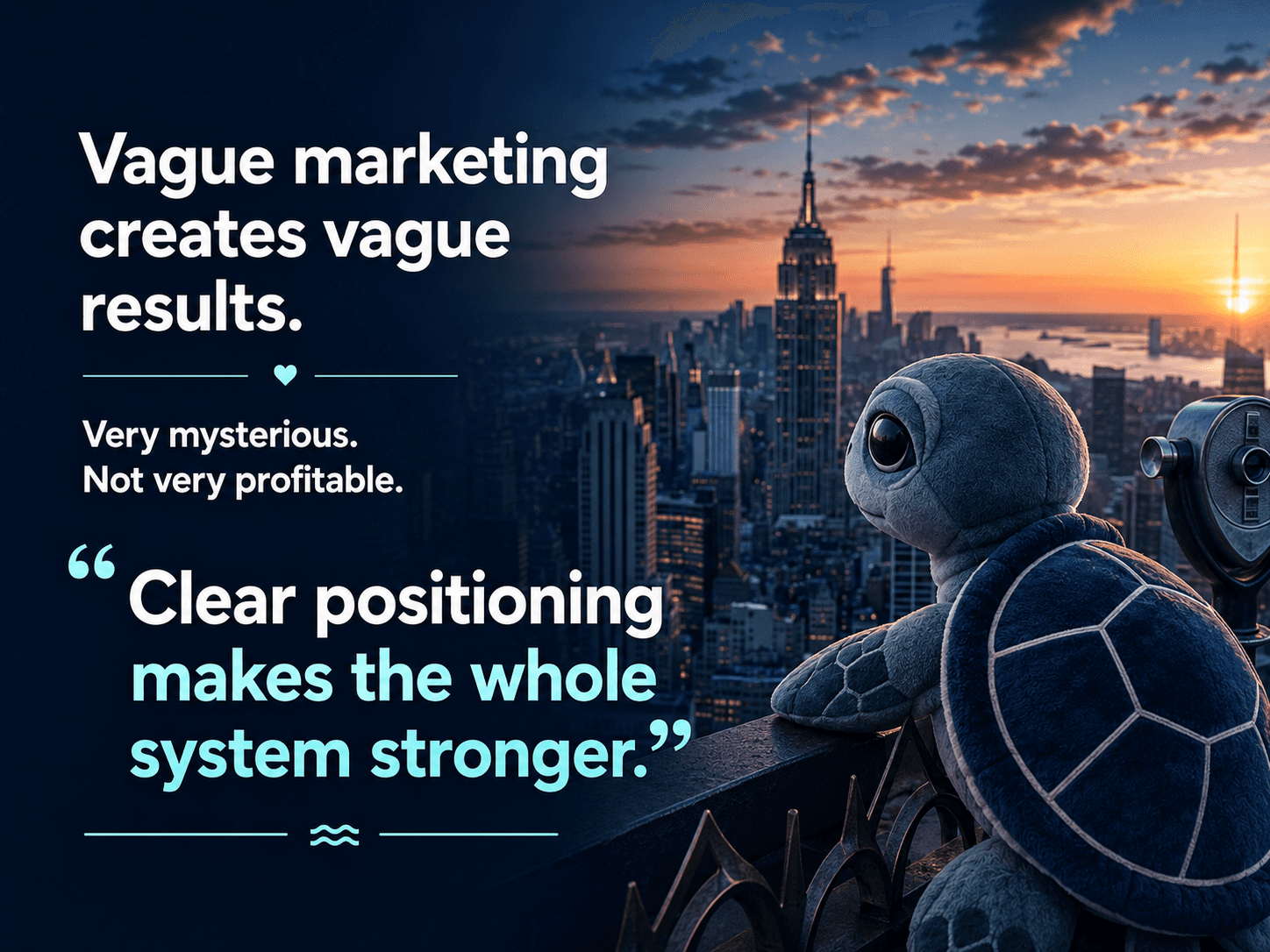
Vague marketing creates vague results.
Very mysterious. Not very profitable.
Clear positioning makes the whole system stronger.
Content Is Now Part of the Funnel
Content is not just something you post to “stay active.”
That is digital cardio.
Useful, maybe, but not enough on its own.
Content is part of the customer journey.
A potential customer may read your blog, watch your video, scroll through your social media, check your comments, read your About page, and form an opinion before ever contacting you.
Your content is doing part of the sales job before sales even begins.
That means content needs to be useful, not just pretty.
It should help people understand your expertise, your process, your values, and your offer.
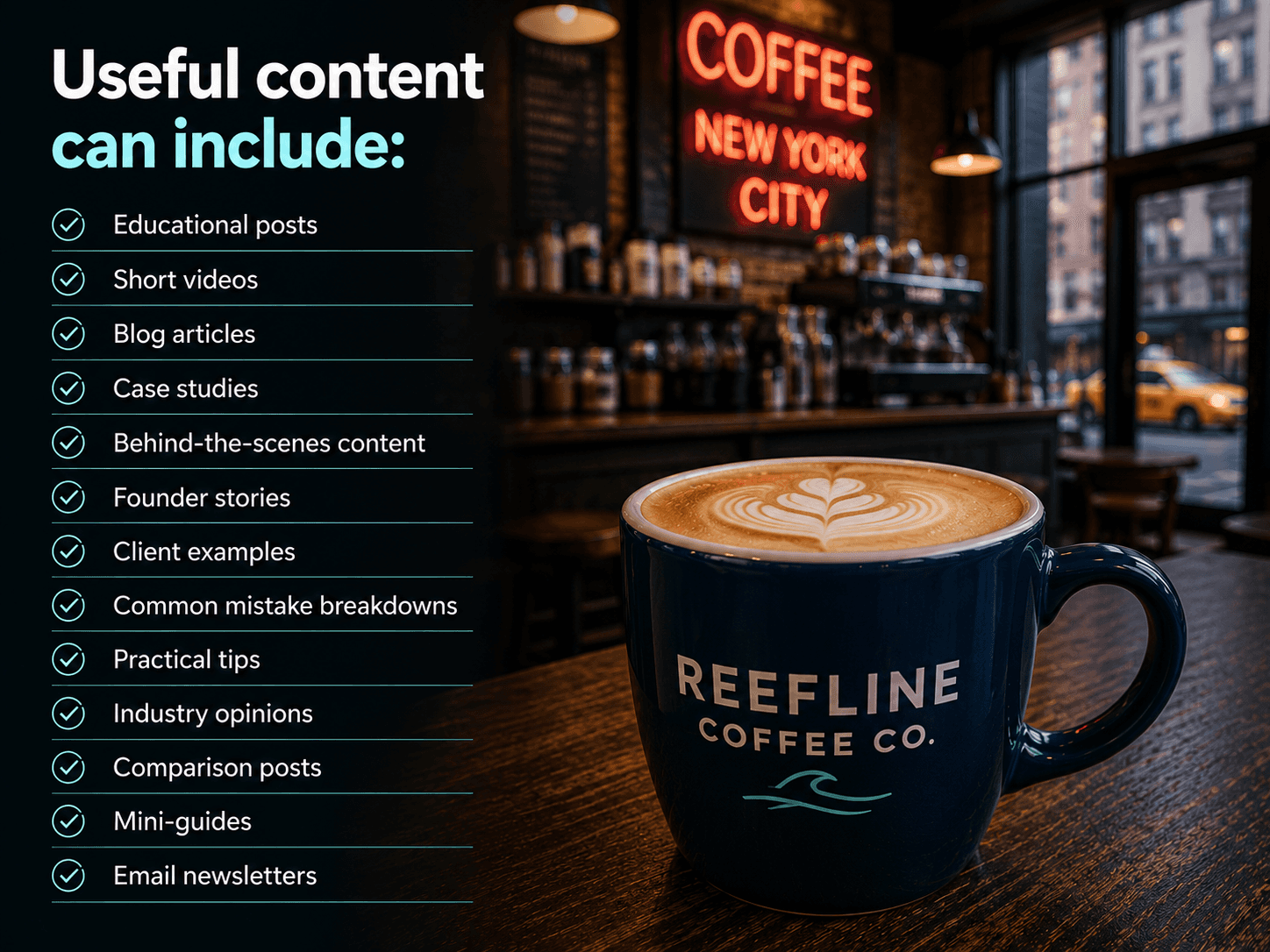
Useful content can include:
Educational posts
Short videos
Blog articles
Case studies
Behind-the-scenes content
Founder stories
Client examples
Common mistake breakdowns
Practical tips
Industry opinions
Comparison posts
Mini-guides
Email newsletters
A nice coffee photo is fine.
But unless you are selling coffee, it probably should not be the entire strategy.
People want to know how you can help them.
Show them.
Social Media Has Become a Trust Channel
For many businesses, social media is not just a visibility channel anymore.
It is a trust channel.
People discover you there. Then they investigate you there.
They watch your videos.
They check your tone.
They look at your comments.
They see whether you are consistent.
They decide whether you feel credible, human, and relevant.
This is especially true for consultants, founders, wellness brands, retreat centers, creative businesses, educators, clinics, and service providers.
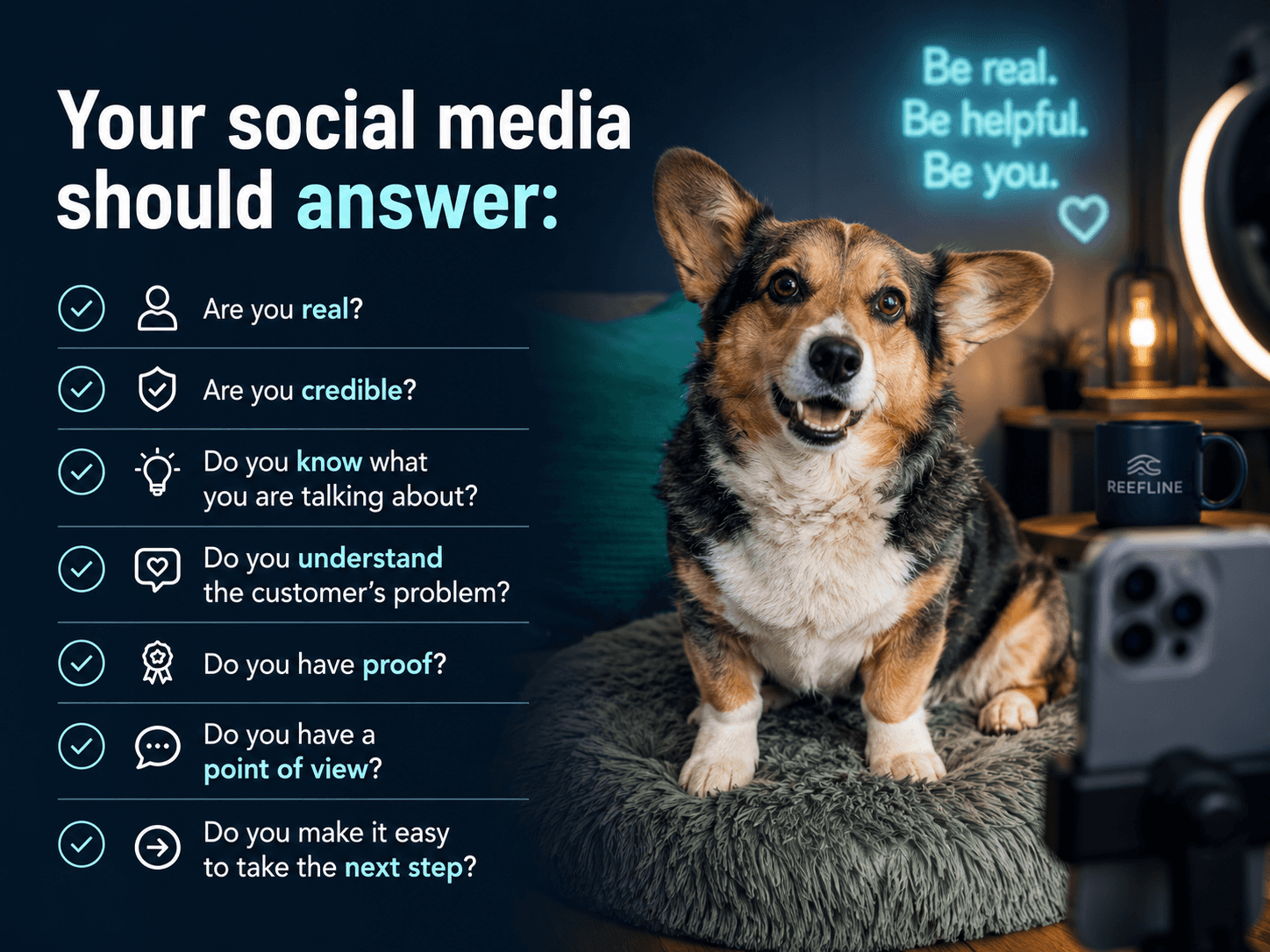
Your social media should answer:
Are you real?
Are you credible?
Do you know what you are talking about?
Do you understand the customer’s problem?
Do you have proof?
Do you have a point of view?
Do you make it easy to take the next step?
Social media does not replace your website.
It does not replace email.
It does not replace SEO.
It does not replace paid ads.
But it influences whether people trust all of those next steps.
Your Instagram, LinkedIn, TikTok, YouTube, or founder page may be the first stage of your funnel.
So no, “just post something” is not enough.
Post with a purpose.
Personal Brand Matters - Even If You Are Not Trying to Become an Influencer
People buy from people, brands, and companies they trust.
And trust is much easier to build when your brand has a human voice.
This does not mean you need to turn your life into a 24/7 content reality show.
Please do not.
It means your audience should understand who is behind the business and what you stand for.
This matters for service businesses, consultants, wellness brands, clinics, biotech-adjacent companies, educational businesses, retreat centers, creative studios, and B2B companies.
Even in technical industries, people still want to know:
Why should I trust this company?
Do they understand my problem?
Are they credible?
Are they consistent?
Do they have standards?
Do they communicate clearly?
Do they actually care about the outcome?
A personal or founder-led brand can help answer those questions faster.
You can build trust by sharing:
Why you started the business
What problem you care about solving
How your process works
What mistakes taught you something
What your values are
What clients often misunderstand
What makes your approach different
What results you help create
You do not need to overshare.
But you do need to sound like a real person.
Because faceless brands have a much harder time earning trust in a crowded market.
Proof Matters More Than Polished Claims
Modern customers are skeptical.
They have seen too many big promises and too many “proven systems” that are mostly vibes in a trench coat.
So they look for proof.
Proof can include:
Testimonials
Case studies
Client examples
Portfolio work
Before-and-after comparisons
Data
Reviews
Screenshots
Process breakdowns
Demonstrations
Credentials
Partnerships
Media mentions
Proof reduces doubt.
And doubt is expensive.
If your offer is good but your marketing does not show proof, people may still hesitate.
Not because they are impossible to please.
Because they are trying to make a safe decision.
Help them.
Strong Calls to Action Still Matter
A surprising number of businesses create content, publish blogs, post on social media, run ads, and then forget to tell people what to do next.
This is bold.
Not effective, but bold.
Every important piece of marketing should have a purpose.
Sometimes the call to action is direct:
Book a consultation
Request a quote
Start your project
Join the waitlist
Download the guide
Contact us
Sometimes it is softer:
Read the full article
Watch the video
Save this checklist
Reply with your question
Explore the service page
Learn more
But there should be a next step.
Do not make people guess.
Customers are not mind readers.
And if they were, they would probably still prefer a button.
Smart Follow-Up Builds Trust
Not everyone buys immediately.
Actually, most people do not.
They may need more information.
They may need more trust.
They may need timing to be right.
They may need to compare options.
They may need to convince a team, partner, boss, or budget spreadsheet with commitment issues.
That is why follow-up matters.
Smart follow-up can include:
Email newsletters
Educational email sequences
Retargeting ads
Personal check-ins
Lead nurturing campaigns
Case study emails
Event invitations
New offer announcements
Useful content updates
Follow-up should not feel like chasing.
It should feel like staying useful.
There is a difference.
Better Free Resources Still Work
Lead magnets still work when they are actually useful.
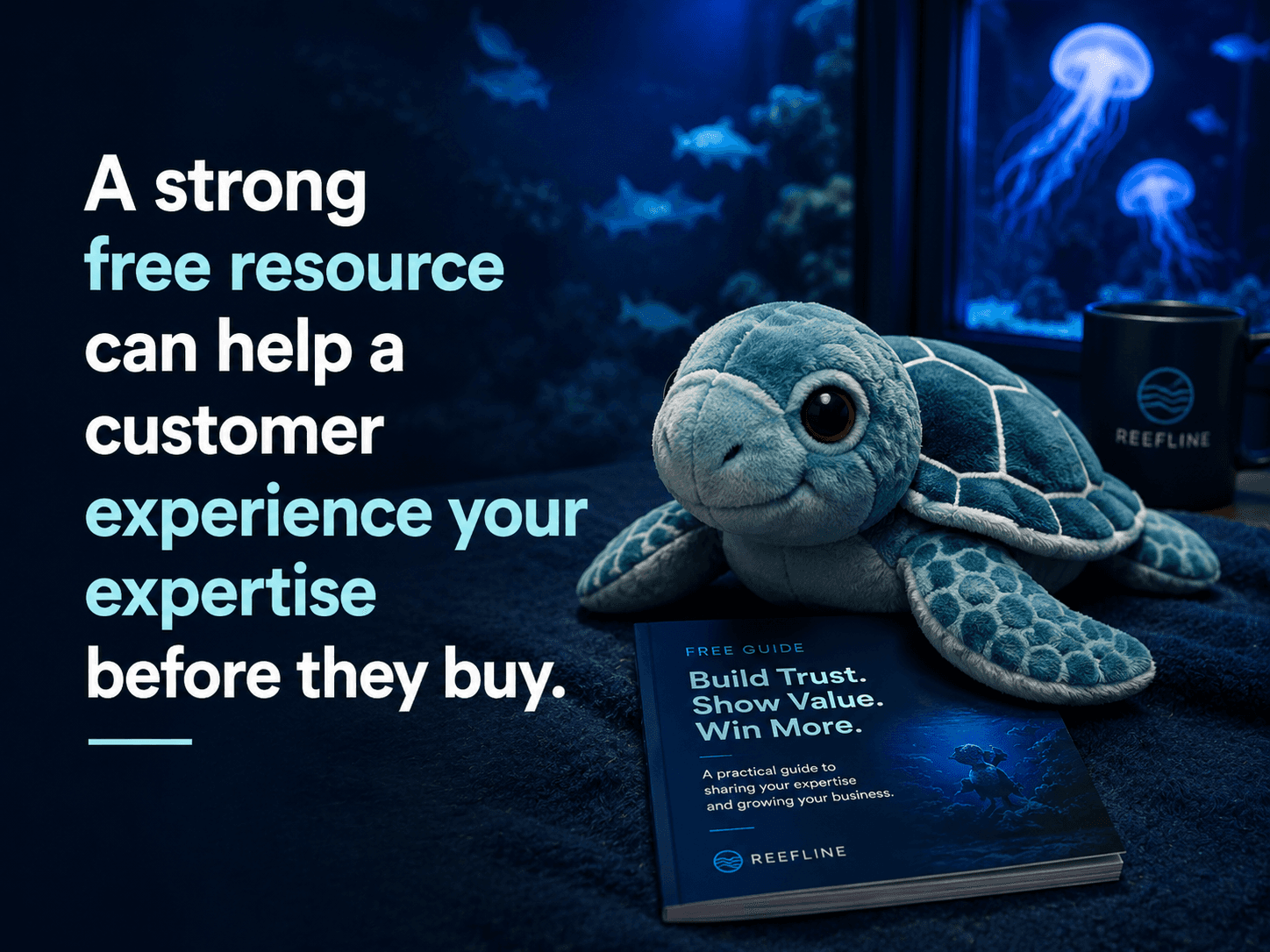
A strong free resource can help a customer experience your expertise before they buy.
Examples include:
A practical checklist
A useful template
A short guide
A calculator
A quiz
A mini-audit
A resource list
A decision-making guide
A short training
A worksheet
A diagnostic tool
The key is that it should solve a real problem or help the customer take a real step.
Not just exist because someone said “you need a lead magnet.”
A good free resource should make people think:
“If this is free, the paid offer is probably worth it.”
That is the standard.
What a Modern Funnel Should Feel Like
A modern funnel should feel simple from the customer side.
They discover you.
They understand what you do.
They see value.
They trust you.
They know what to do next.
That is it.
The backend can still be strategic. You can still use SEO, paid ads, content, email, CRM, landing pages, lead magnets, and retargeting.
But the customer should not feel like they are being dragged through a machine.
They should feel guided.
A modern funnel should be:
Clear
Useful
Human
Trust-based
Easy to navigate
Connected across platforms
Focused on real customer needs
Simple does not mean shallow.
Simple means the complexity is handled behind the scenes, not dumped onto the customer.
Practical Checklist: Is Your Funnel Clear Enough?
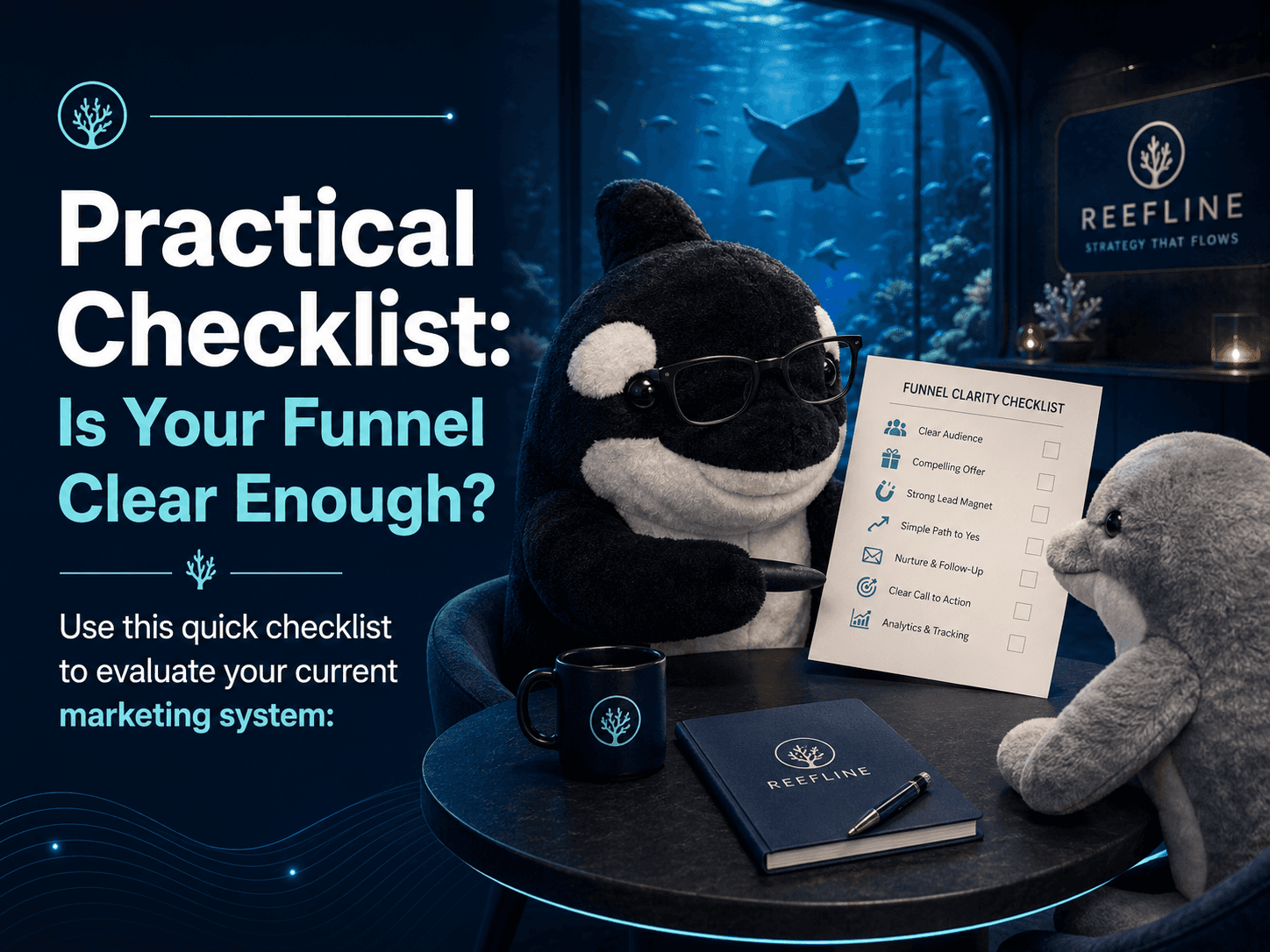
Use this quick checklist to evaluate your current marketing system:
Can people understand what you do within five seconds of landing on your website?
Is your ideal customer clearly defined?
Does your content explain the problems you solve?
Do you show proof through case studies, testimonials, examples, or results?
Do you have a clear call to action on every important page?
Do you offer a useful next step for people who are not ready to buy immediately?
Do you follow up with leads through email, retargeting, or direct communication?
Is your free content strong enough to build trust?
Does your brand voice feel human and consistent?
Is your customer journey simple, or are there too many unnecessary steps?
If you answered “no” to several of these questions, your marketing may not need more noise.
It may need a clearer strategy.
Final Thoughts: Modern Marketing Is About Trust and Direction
Modern marketing is not about tricking people into buying.
It is about helping the right people understand why your business matters.
It is about creating useful content, clear positioning, strong proof, human communication, and a customer journey that makes sense.
The businesses that win are not always the loudest.
They are the ones that make it easiest for the right customers to trust them.
At Reefline Marketing, we help businesses turn scattered marketing pieces into connected growth systems -from brand messaging and content strategy to websites, SEO, paid ads, email marketing, campaigns, and funnel strategy.
Basically, we help your marketing get an actual job.
And we make sure it knows what it is doing.
Key Takeaways
Modern marketing works best when it is clear, useful, and connected.
Customers need fewer unnecessary steps and more clarity.
Content is part of the funnel, not just a visibility tool.
Social media helps build trust before people visit your website or book a call.
Personal brand matters because people trust human voices more than faceless messaging.
Proof reduces doubt and makes buying decisions easier.
Strong calls to action help people understand what to do next.
Follow-up should feel useful, not desperate.
Lead magnets still work when they solve a real problem.
A modern funnel should guide people, not pressure them.


